 45 pages
Sample deliverable · 45 pages
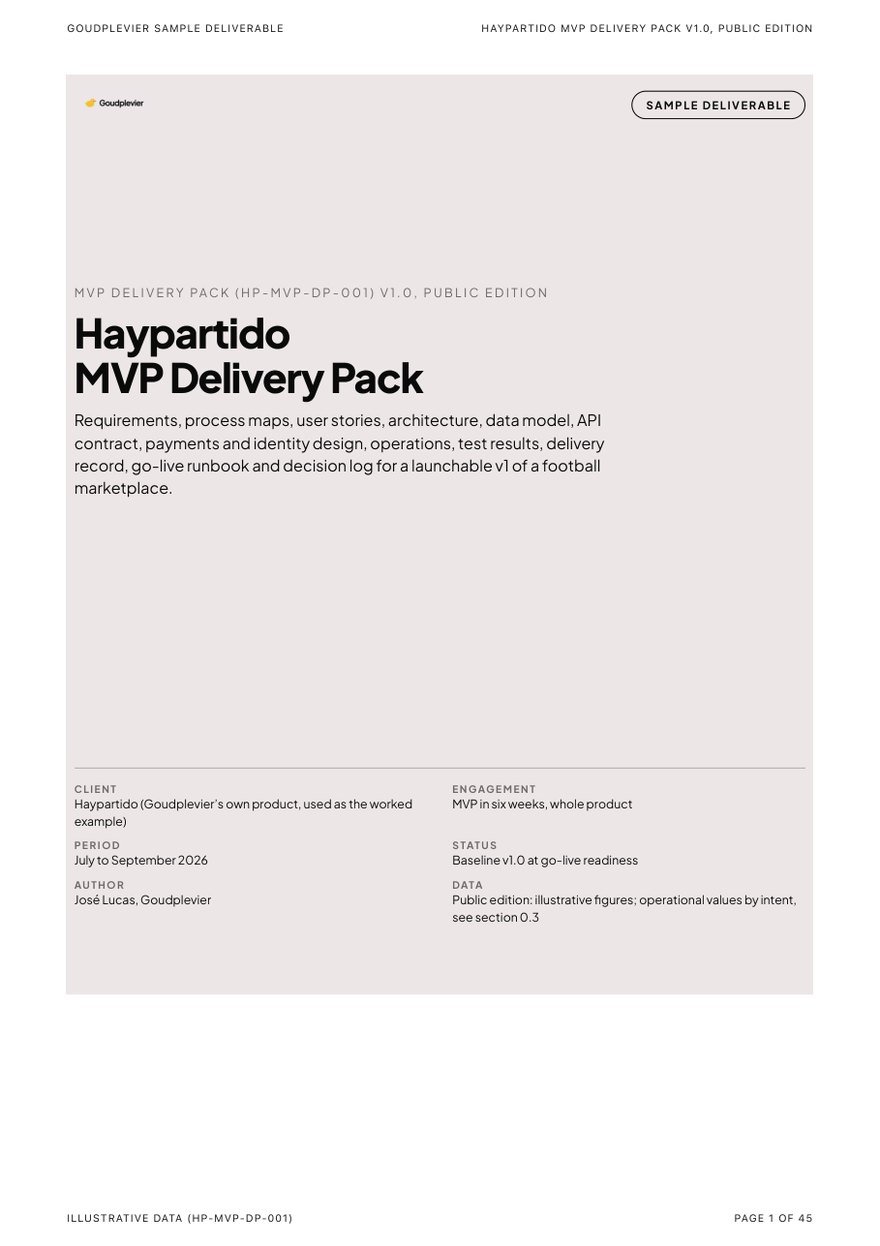
Haypartido MVP Delivery Pack
One example of the documentation an MVP engagement leaves behind, with Haypartido as the worked case. Numbered requirements with traceability, process maps, user stories with acceptance criteria, C4 architecture views, an entity model and data dictionary, an API contract with worked payloads, sequence and state diagrams, payments and identity design, operations and runbooks, test cases and UAT results, a delivery plan, a go-live runbook, RAID and decision logs, and a handover inventory. It sits alongside the code, the shipped apps and the test harness.
Where each product shows up
Requirements Packsections 2 to 7, Appendix BMVP in six weeks · whole productsections 8 to 17UAT and Go-livesections 16 to 18Dashboardsection 2.3 KPI tableAutomation Pilotsection 14 jobs and runbooks
Contents, section by section
- 1 to 2Executive summary, objectives and KPIs
- 3Scope, assumptions, constraints
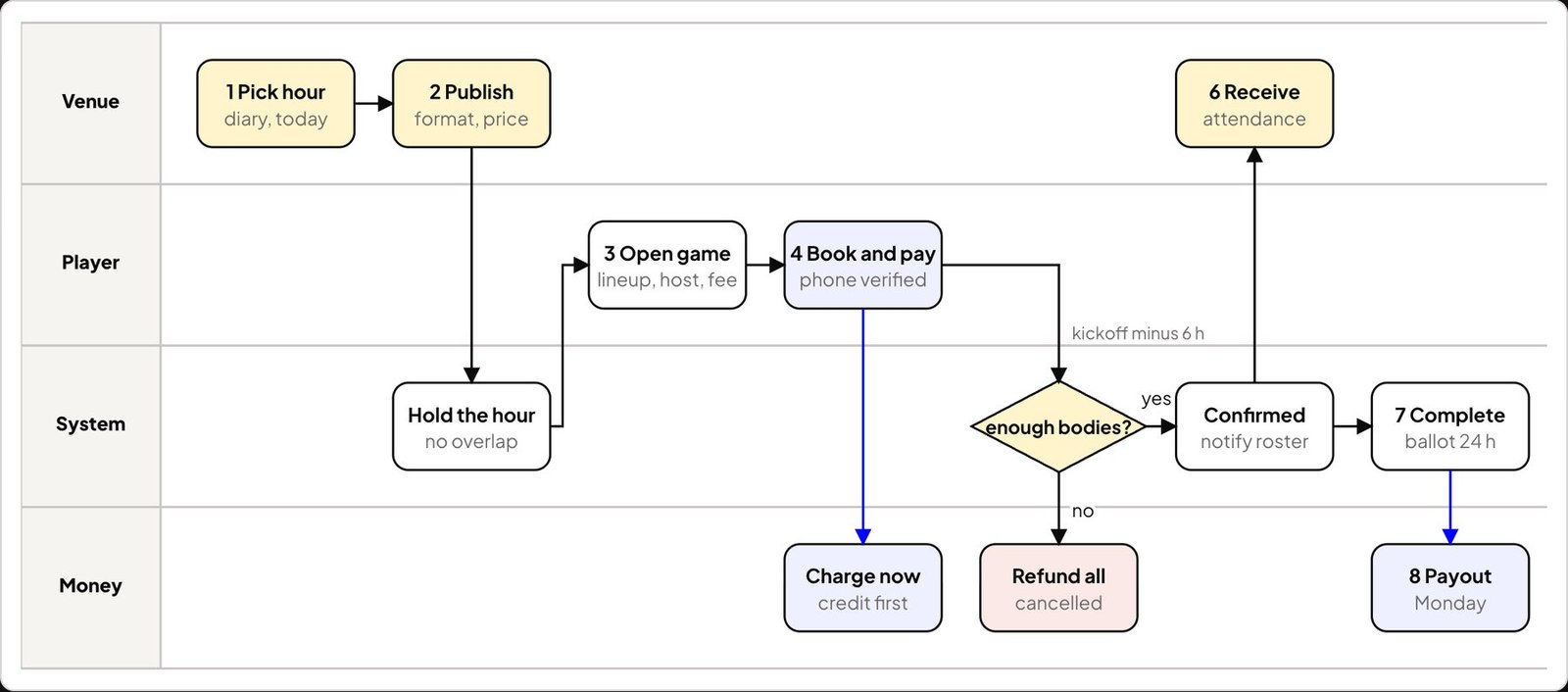
- 4Business processes and decision table
- 5Functional requirements
- 6User stories with acceptance criteria
- 7Non-functional requirements
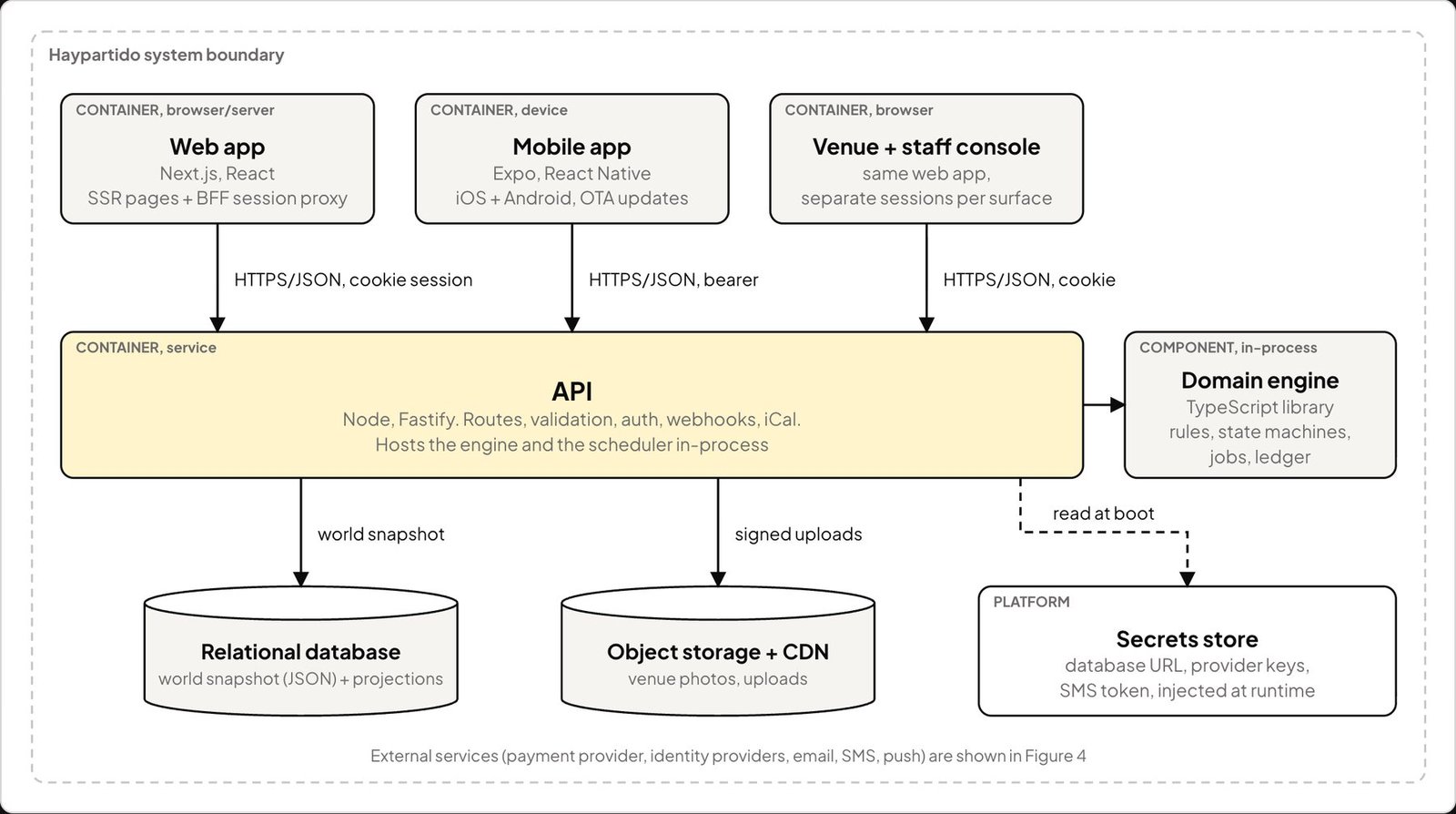
- 8Solution architecture and ADRs
- 9Data model and data dictionary
- 10API contract with worked examples
- 11Key interactions: sequences and states
- 12Payments design
- 13Identity, access and personal data
- 14Automation, operations and monitoring
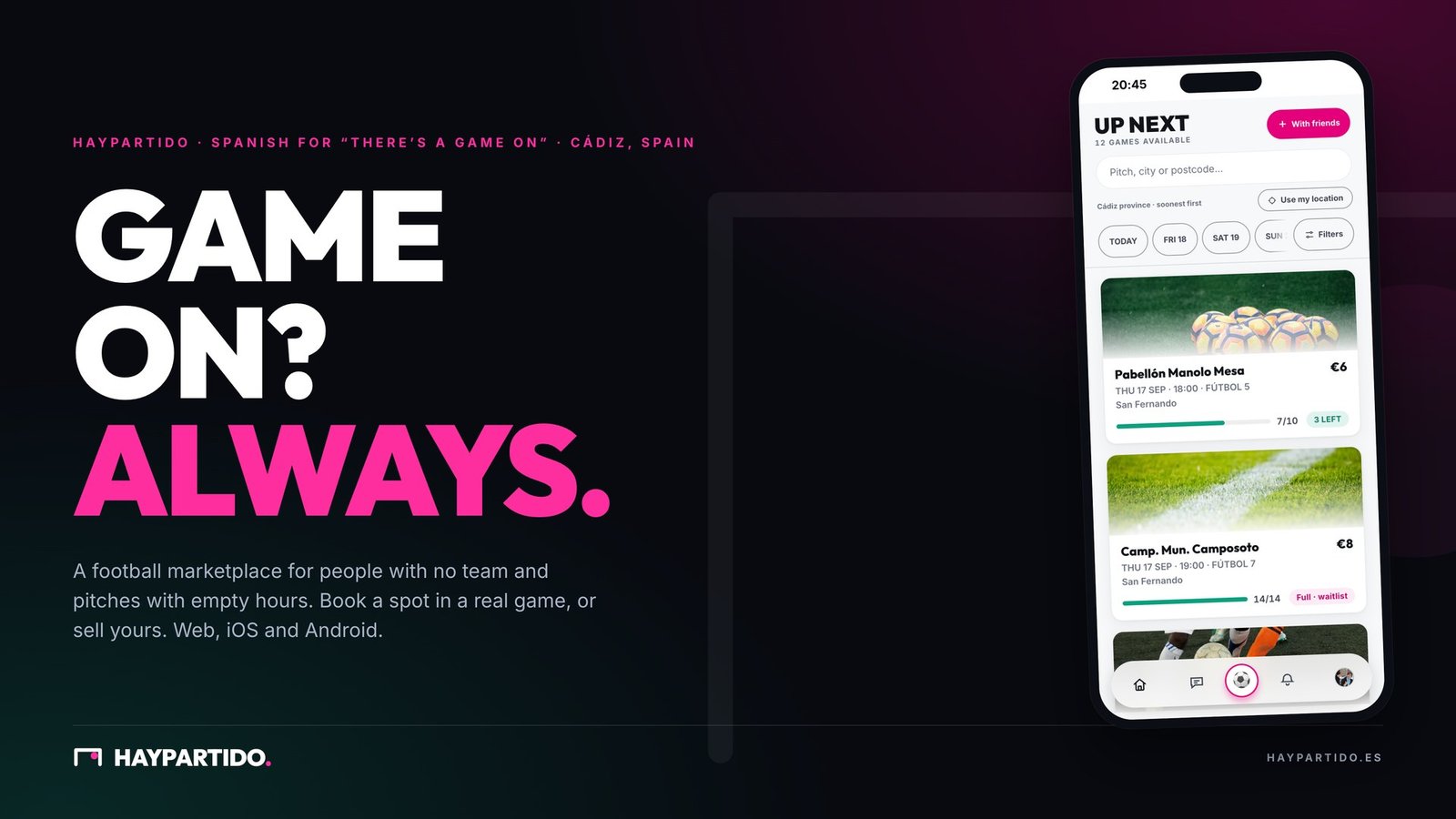
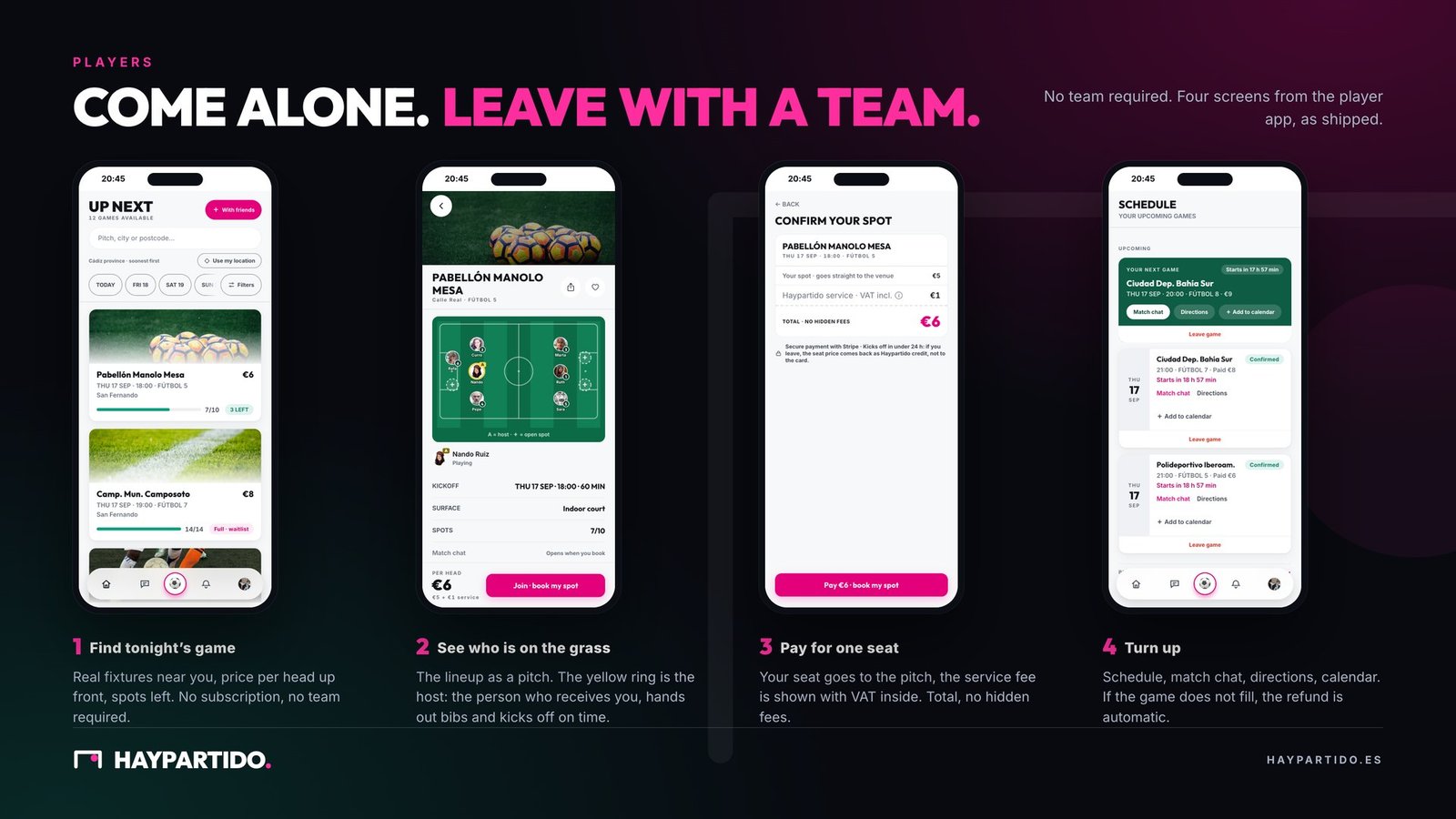
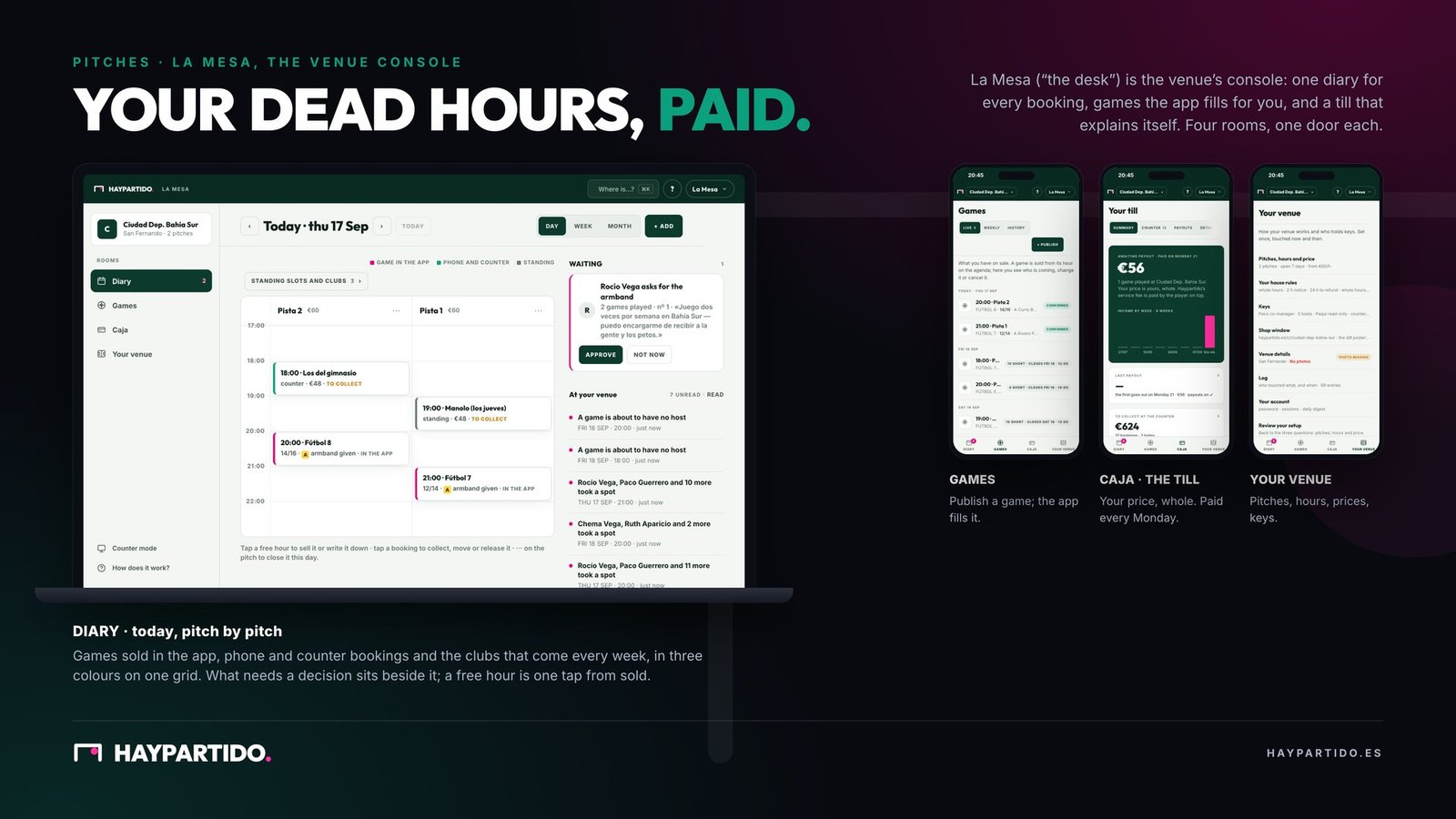
- 15Screens: from wireframe to shipped UI
- 16Test strategy, UAT and results
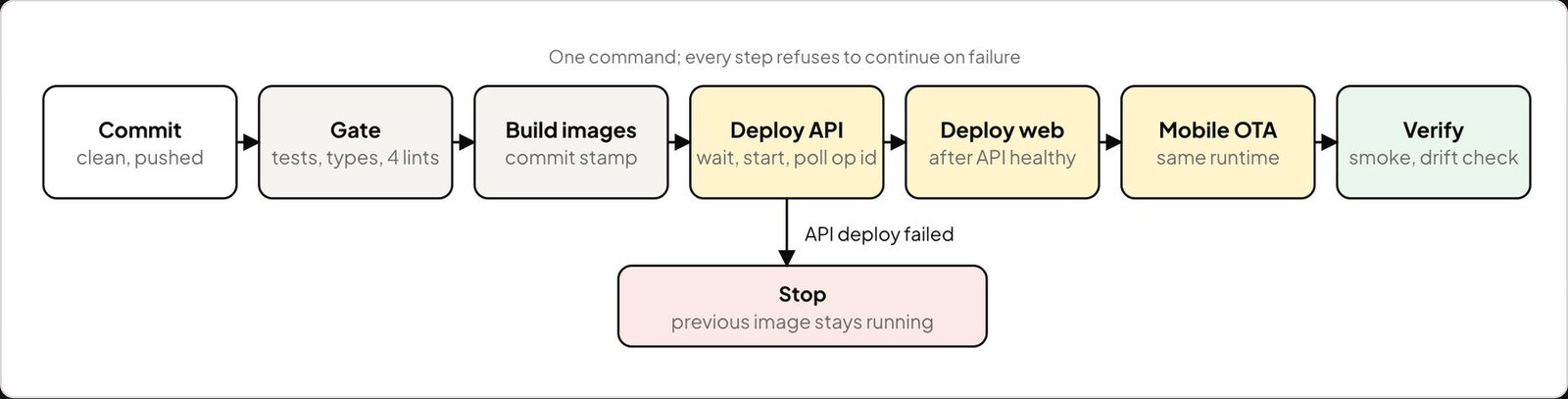
- 17Delivery plan and ways of working
- 18Go-live: readiness, cutover, hypercare
- 19 to 21RAID log, decision log, handover
- AppendicesGlossary, traceability, notifications, config